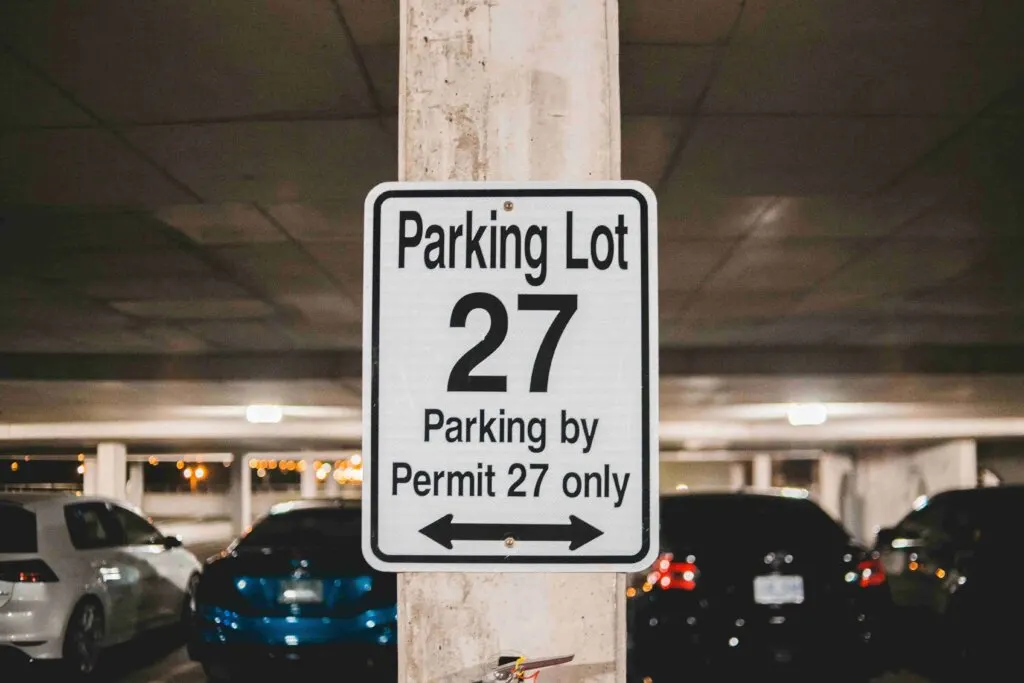
The Fee That Quietly Wrecks Your Budget
A couple relocating from Denver called us last winter after signing a lease downtown. They’d compared base rent across five properties and picked the lowest one: $1,750/month. But that property charged $200/month for a single garage spot. They needed two. Total parking bill: $400/month. Their “cheapest” apartment suddenly cost $2,150/month before a single mandatory fee hit the statement. That’s $4,800/year in parking alone, more than they spent on groceries.
Parking is one of the most inconsistent line items in Austin’s rental market. One community includes a spot free with every lease. The complex across the street charges separately for every space, every month, no exceptions. That gap, spread across a 12-month lease, is $1,200 to $4,200 you either pay or don’t. Most listing sites don’t even show parking costs until you’re already on a tour. We track pricing across more than 1,100 Austin communities daily, and parking surprises sit near the top of the reasons renters blow their budget.
Below, we break down every parking type, what each costs across Austin’s submarkets, how EV charging fits in, where street parking and permits can stand in, and how to work out what parking actually does to your net effective rent. Nobody else had written it, so we did. Parking is the hidden number that changes which apartment is actually the best deal.
What Apartment Parking Actually Costs in Austin
The short answer ($0 to $350/month) isn’t much use on its own. Parking costs come down to three things: where the property is located, what class it falls into, and what type of parking you need.
Here’s the baseline across Austin as of early 2026:
| Parking Type | Typical Monthly Cost | Where You’ll Find It |
|---|---|---|
| Uncovered surface lot | $0–$50 | Suburban Class B/C properties, some Class A |
| Covered carport | $50–$100 | Suburban and mid-urban Class A/B properties |
| Parking garage (unreserved) | $75–$150 | Urban Class A and Luxury properties |
| Parking garage (reserved) | $150–$250 | Downtown high-rises, Luxury/A+ communities |
| Premium reserved (w/ outlet) | $250–$350 | Downtown Luxury high-rises |
| Tandem/stacked parking | $75–$125 | Select downtown and urban infill properties |
One unreserved garage spot at a downtown high-rise can cost more per month than renter’s insurance, valet trash, and pest control combined. That’s why we include parking in every cost comparison we run for clients.
Don’t forget the parking deposit. Many properties charge a one-time parking deposit of $100–$300 on top of the monthly fee, especially for garage and reserved spots. It’s separate from your apartment security deposit and may or may not be refundable. It’s one more move-in cost that catches renters off guard when they’re already writing checks for first month’s rent, deposit, and admin fees.
How Property Class Shapes Parking Costs
Property class is the best single clue to whether you’ll pay for parking, and how much.
Luxury/A+ properties (built in the last 5 years): Don’t expect free parking here. Garage spots run $100–$350/month, with reserved spaces at the top of that range. Downtown towers like those on Rainey Street charge $150–$350/month for reserved spaces with outlet access. These buildings treat parking as its own income line, not something bundled into rent.
Class A properties (5–15 years old): It comes down to location. Class A properties in The Domain or the South Lamar corridor tend to include one uncovered or covered spot. Get closer to downtown, though, and you’re looking at $50–$100/month for covered parking.
Class B properties (15+ years old): Almost always included. These communities went up when one or two spots per unit was just how things were built. Surface lots are standard, and charging separately for parking would push residents to the property next door.
The newer and more urban the property, the more likely parking costs extra. Full stop.
Parking Types Explained: What You’re Actually Getting
Not all parking is equal, and the wording on lease addendums can be confusing. Here’s what each type means in practice.
Uncovered Surface Lot
An open-air parking space in an asphalt lot. No roof, no walls, no assigned number. It’s the most common parking type at suburban Austin apartments and the one most likely to be included in your rent.
The trade-off: Your car bakes in the Texas sun. We’re talking interior temperatures above 150°F during Austin summers. Hail is a real risk in Central Texas, which sees several hailstorms a year. And at older complexes? Surface lots may not have decent lighting or security cameras.
A suburban property charging more than $50/month for an uncovered spot is overcharging. The going rate, when it’s not free, is $25–$50.
Covered Carport
A metal or wood-frame structure covering individual parking spaces, usually in rows along the perimeter of the property. Carports protect your vehicle from direct sun and most hail damage but leave it exposed on the sides.
Typical cost: $50–$100/month, or sometimes a one-time annual fee of $300–$600.
Covered carports are the sweet spot for Austin renters. You get real weather protection without paying garage prices. We see the highest demand for carport spaces at properties in the $1,400–$2,000/month rent range, where renters want to protect their vehicles but aren’t willing to pay $150+ for garage parking.
Parking Garage (Unreserved)
Access to a structured parking garage (concrete decks, weather protection, controlled entry) but no assigned space. Park wherever you find an open spot.
Typical cost: $75–$150/month.
Your car stays dry and on camera. That’s the upside. The downside: on evenings and weekends, you might circle three levels before you find anything. And that convenient second-floor spot you grabbed yesterday? Someone else took it this morning. “Unreserved” means exactly what it says.
Parking Garage (Reserved)
Same garage, but you get a specific numbered space assigned to you for the duration of your lease. Nobody else can park there.
Typical cost: $150–$250/month.
Reserved spots are usually on lower floors near elevators or exits, the most convenient spots in the garage. At downtown high-rises, reserved parking is the norm, and the pricing shows it. One downtown luxury property on Rainey Street charges $250/month for standard reserved and $350/month for premium reserved spots that include a 120V outlet.
Premium Reserved (with EV Outlet or Charger)
A reserved garage spot that includes access to an electrical outlet or a dedicated EV charging station. It’s the newest kind of parking in Austin, and the one growing fastest.
Typical cost: $250–$350/month for the space alone, with charging costs on top (more on that in the EV section below).
Tandem Parking
Two cars share a single-width space, parked one behind the other. The first car in blocks the second. This works for two drivers who can coordinate schedules but turns into a daily hassle if both need to come and go on their own.
Typical cost: $75–$125/month for the tandem space (cheaper per vehicle than two separate garage spots, but you’re sharing the space).
Tandem spots are most common at newer urban infill properties where the developer squeezed in more units and gave up parking to do it. You’ll see these at some East Austin and South Lamar developments.
Second Vehicle Costs: The Bill That Doubles
With two cars, the parking math changes fast. Most properties that include one spot free charge full price for the second, and some limit the second spot to pricier tiers.
| Property Type | 1st Vehicle Cost | 2nd Vehicle Cost | Combined Monthly |
|---|---|---|---|
| Suburban Class B (included) | $0 | $0–$50 | $0–$50 |
| Suburban Class A (included) | $0 | $50–$100 | $50–$100 |
| Urban Class A (garage) | $75–$150 | $100–$175 | $175–$325 |
| Downtown Luxury (garage) | $150–$250 | $250–$350 (reserved only) | $400–$600 |
That last row deserves a second look. A couple living downtown with two cars in reserved garage spots can pay $400–$600/month just for parking. Over a 12-month lease, that’s $4,800–$7,200, more than most security deposits and move-in costs combined.
Some downtown high-rises require the second spot to be reserved or higher. You can’t buy two unreserved spots. The building has fewer total spaces than units, so second vehicles get pushed into the premium tier whether you want it or not.
Motorcycle and Scooter Parking
Austin’s growing moped and motorcycle population has a parking advantage most riders don’t know about. Many properties offer motorcycle spaces at $25–$50/month (or free at some suburban complexes). These spots usually sit in corners of the garage or at the edges of surface lots.
If you commute by motorcycle or electric scooter and only use a car on weekends, ask whether the property will let you lease a motorcycle spot instead of a full-size space. That saves $50–$200/month, based on property class.
Parking Costs by Austin Neighborhood
Parking costs vary as much by geography as by property type. Here’s what parking typically runs across Austin’s major apartment corridors:
| Area | Typical Parking Situation | Monthly Cost Range |
|---|---|---|
| Downtown (78701) | Garage required; surface lots rare | $150–$350 |
| Rainey Street District | Garage only; high demand | $150–$350 |
| East Austin (78702) | Mixed. Some surface lots, some garage | $0–$150 |
| South Congress / SoCo (78704) | Limited parking; garage or street | $75–$200 |
| South Lamar Corridor | Mix of covered and garage | $50–$150 |
| The Domain (78758) | Garage standard; some covered | $0–$150 |
| North Austin / Arboretum | Surface lot or covered, often included | $0–$75 |
| Mueller | Mixed. Permit parking in neighborhood | $0–$100 |
| Round Rock / Pflugerville | Surface lot, almost always included | $0 |
| Cedar Park / Leander | Surface lot, almost always included | $0 |
| West Campus / UT Area | Garage parking; high demand | $80–$300 |
The pattern: the closer you are to Austin’s urban core, the more you pay for parking. Suburban properties north of 183, south of Slaughter Lane, or in Round Rock/Pflugerville/Cedar Park include parking as standard. Surface lots are cheap to build on cheaper land, so there’s no reason to charge separately.
Downtown and Rainey Street properties sit at the far end. Structured parking in a downtown high-rise costs $25,000–$65,000 per space to build. Properties pass that cost through to residents as monthly parking fees rather than folding it into higher base rent. Listing a lower base rent makes the property look more competitive on listing sites like Apartments.com and Zillow.
That pricing move is worth understanding. You see a downtown apartment listed at $1,800/month and a suburban apartment listed at $1,850/month. Which one’s cheaper? Depends. After parking, the downtown unit might run $2,000–$2,150/month. The suburban unit? $1,850 all-in, parking included.
How Parking Changes Your Net Effective Rent
Net effective rent is the actual monthly cost after move-in specials are prorated across the lease term. It’s our signature number, and parking can bend the math in ways that surprise people.
Here’s a side by side example that shows how:
Scenario: Downtown vs. Domain, Which Is Actually Cheaper?
Important: Most Austin concessions only waive base rent. Parking fees and mandatory fees still get billed every month, even during “free” months. That changes the math.
| Cost Component | Downtown Property A | Domain Property B |
|---|---|---|
| Base rent (1BR) | $1,800/month | $2,000/month |
| Concession | 2 months free rent on 12-month lease | 1 month free rent on 12-month lease |
| Parking | $200/month (garage, unreserved) | $0 (included covered parking) |
| Mandatory fees | $135/month (valet trash, water, pest, tech) | $95/month (valet trash, water, pest) |
| Total monthly cost (no concession) | $2,135 | $2,095 |
| 12-month total (after concession) | $22,020 | $23,140 |
| Net effective rent | $1,835/month | $1,928/month |
Property A has the lower base rent and a better concession. But that $200/month parking fee eats into the gap. Property A still wins on net effective rent in year one, but only by $93/month. Before parking and fees, A was ahead by $333/month. Parking alone ate $200 of that.
Now look at year two. Property A’s concession disappears. Monthly cost jumps to $2,135. Property B’s jumps to $2,095. Suddenly Property B is $40/month cheaper. And that $200/month parking fee? It’s the entire reason.
We build parking into every comparison we run. It isn’t optional math. It’s part of what the apartment actually costs.
If you want help running these numbers for specific properties, give our team a call at (512) 360-0852. We’ll calculate the net effective rent including parking for any apartment you’re considering.
EV Charging at Austin Apartments
EV adoption in Austin keeps climbing. Apartment chargers? They’re trying to keep up, with mixed results.
The Current State
EV charging at Austin apartments falls into four categories:
| Charging Setup | What It Means | Typical Cost |
|---|---|---|
| Level 2 dedicated chargers (ChargePoint, etc.) | Community-shared stations in garage or lot | $0.09–$2.00/kWh or per hour |
| 120V outlets in garage | Standard household outlet at parking space | Electricity included or billed to unit |
| No EV infrastructure | No charging available on-site | N/A. Rely on public network |
| Pre-wired for future install | Conduit run to spaces, no chargers yet | N/A |
Newer Luxury/A+ communities built after 2020 are most likely to offer Level 2 chargers. Some have partnered with networks like ChargePoint or Xeal Energy for shared stations that residents open with an app or RFID card. Costs range from $0.09/kWh at some properties to flat hourly rates of $1.00–$2.00.
Older properties, even well kept Class A communities, usually have no EV chargers at all. Adding Level 2 chargers to an existing garage runs $3,000–$7,000 per station once you count electrical upgrades. That’s real money. In a soft rental market where properties are already offering weeks of free rent, most owners aren’t rushing to add that expense.
What to Ask Before Signing
If you drive an EV (or plan to buy one), these questions belong on your apartment tour checklist:
How many chargers exist, and how many units share them? Four Level 2 chargers serving 300 units is a very different situation from 20 chargers serving 200 units. At some communities, residents wait hours for an open charger in the evening. At others, it’s never a problem.
Who pays for the electricity? Some communities bundle charging into the amenity package. Others bill per kWh through the charger network’s app. Over a month of daily charging, that difference can be $30–$80.
Can you get an outlet at your parking space? A few downtown garages offer 120V outlets at premium reserved spots. Level 1 charging is slow (4–5 miles of range per hour), but for overnight charging on a daily commute under 40 miles, it works.
Is the building pre-wired for expansion? Properties built after 2022 sometimes run conduit to parking spaces even without installing chargers yet. That’s a sign they plan to add chargers as demand grows.
Austin’s Public Charging Network as a Backup
Austin Energy operates one of the largest municipal EV charging networks in the country, with hundreds of public charging ports across the city. If your apartment doesn’t have on-site charging, public stations are the fallback, but relying only on public charging adds time, hassle, and cost to your routine.
The City of Austin keeps information on metered zones and public lots. And apps like PlugShare and ChargePoint show real-time EV charger availability.
Street Parking and Permit Alternatives
Not every renter wants to pay for on-site parking, and in some neighborhoods, street parking looks like a free alternative. But Austin’s street parking rules have gotten more complicated, and “free” doesn’t always mean free.
The Residential Permit Parking (RPP) Program
Austin’s RPP program restricts street parking in 52 designated zones to residents with permits. If you’re renting an apartment in or near one of these zones, street parking may not be the free alternative you think it is.
Neighborhoods with active RPP zones include: Hyde Park, West Campus, North University, parts of East Austin, Mueller, and streets near Zilker and South Congress.
RPP permit costs:
| Permit Number | Annual Cost |
|---|---|
| 1st permit | $20 |
| 2nd permit | $25 |
| 3rd permit | $30 |
| 4th permit | $35 |
| 5th permit | $60 |
| 6th permit | $70 |
Day passes for visitors cost $5 each. You can purchase up to 20 per year from the city’s permitting office.
RPP enforcement hours vary by zone but typically run 4 PM to 10 PM on weekdays, with some zones adding Saturday enforcement. Park in an RPP zone without a valid permit during those hours and you risk a ticket.
Important note for apartment renters: RPP permits require proof of residency at an address on the permitted block. If your apartment complex is on a permitted street, you may be eligible. But if your complex is a block away from the RPP zone, you won’t qualify for that zone’s permits, no matter how close you are. Check with the City of Austin’s Residential Parking Permit office before you count on street parking.
The Parking Minimums Shift
In November 2023, Austin eliminated parking minimums for all new construction, the largest U.S. city to do so. Under the old rules, developers had to build at least 1.5 parking spaces per one-bedroom apartment and an additional 0.5 spaces per extra bedroom.
What does that mean for you as a renter? New apartment developments, especially along transit corridors, may have far less parking than older properties. Some projects opening now have no parking at all. The thinking: you’ll ride CapMetro, take the future Project Connect light rail, or use ride-shares.
City officials estimated that each required parking space adds up to $200/month to rent. Building a single parking garage space costs $25,000–$65,000. That cost gets passed to residents, either baked into higher base rent or charged as a separate monthly parking fee.
Austin’s Fee Transparency Push
In October 2024, Austin City Council passed a resolution directing staff to draft an ordinance requiring landlords with five or more units to disclose all fees, including parking, when a renter applies. That resolution became law: City Council adopted the Rental Fee Transparency Ordinance on May 28, 2026.
Why does this matter? Parking has been one of the most often hidden fees in Austin’s rental market. Some properties don’t show parking costs until lease signing, after you’ve already paid a nonrefundable application fee. Since October 1, 2026, landlords with 50 or more units must give you a written, itemized list of mandatory, optional and variable fees, parking included, before quoting rent or taking an application, and ads that show a rent must list recurring fixed fees too. Landlords with 5 to 49 units follow on January 1, 2027.
Our position is simple: renters should see parking costs before they apply. It’s the right way to help people decide, and the ordinance now requires it.
Most existing properties still have plenty of parking. But if you’re looking at a newer development, ask about the parking ratio (spaces per unit). A property with a 0.8 ratio has 80 spaces for 100 units. Somebody’s not getting a spot, and you don’t want it to be you.
When Going Car-Free Pencils Out
Most parking guides won’t run this math for you. But if you’re looking at a downtown apartment or one near good transit, it’s worth seeing what a car actually costs in Austin:
- Parking: $150–$300/month
- Car insurance: $150–$250/month
- Gas/charging: $80–$150/month
- Maintenance: $75–$125/month
- Total: $455–$825/month
A CapMetro monthly bus pass costs $41.25. Toss in $100–$200/month for occasional ride-shares, and you could still save $200–$500/month by ditching the car, as long as your apartment sits in a walkable corridor with good transit, like downtown, South Congress, or near a future Project Connect light rail station.
Run the numbers and something surprising happens. A “more expensive” downtown apartment at $2,200/month with no car might cost less per month than a $1,600/month suburban place where you need two vehicles. We’re not telling anyone to go car free. Austin’s transit has real gaps. But for renters who work from home or commute along a strong CapMetro route, it’s worth running the numbers before assuming you need $200/month parking.
Towing: The Enforcement Reality
Complexes with limited parking don’t mess around. Most hire towing companies that patrol 24/7. Park in someone’s reserved spot, block a fire lane, or let a guest permit lapse, and you’re looking at $250+ to get your car out of impound, plus daily storage fees if you don’t pick it up fast.
Keep your permit stickers, hang tags, and gate access cards current. Expired permits get towed just as quickly as unauthorized vehicles.
How to Negotiate Parking Costs (and When You Can’t)
Parking fees aren’t always set in stone. Market conditions and timing open doors if you know when to push.
When Negotiation Works
Off-peak leasing season (December–February): Properties with high vacancy need to fill units. Parking upgrades, from uncovered to covered or from unreserved to reserved, are one of the first extras they’ll offer. We’ve seen properties waive parking fees entirely for winter move-ins when vacancy is above 10%.
New construction lease-up: A property that just opened and needs to reach 80% occupancy fast will often include parking upgrades as part of the move-in package. Ask for one month of free parking, a parking upgrade, or a waived parking deposit.
Renewal negotiation: If your property has raised parking fees year-over-year, push back during renewal. Properties would rather keep a reliable tenant at the current parking rate than lose them and pay $1,500–$3,000 in turnover costs.
When Negotiation Doesn’t Work
Downtown high-rises with low vacancy: When a building is 95%+ full, there’s no reason for it to discount parking. These properties have waiting lists for reserved spots.
Properties with third-party parking management: Some complexes outsource parking to companies like ParkM or LAZ Parking. In those cases, the leasing office may not be able to change parking rates. It’s a separate contract.
Peak season (May–August): High demand means no bargaining power. If you’re moving downtown in June, expect to pay the posted rate.
The Parking Upgrade Strategy
A tactic we recommend: sign the lease with the cheapest parking option available (or skip parking entirely, if the property allows it). Then, after 3–6 months as a reliable tenant, ask about upgrading. Properties bend a lot more for residents they want to keep than for applicants walking in the door. Losing a good tenant costs them $1,500–$3,000 in turnover, far more than whatever discount they’d give you on a covered spot.
Want help with parking as part of a lease? Call our team at (512) 360-0852. Apartment locating is free (the apartment community pays us a referral fee), and we bring up parking as part of the process.
Common Parking Mistakes Austin Renters Make
In the leases we help with, these parking mistakes come up over and over.
Mistake #1: Ignoring Parking Costs When Comparing Apartments
The biggest one, and the most expensive. Two apartments with the same base rent can differ by $100–$300/month once you add parking. Ask “what does parking cost?” on the first tour. Not the second. Not at lease signing.
Mistake #2: Assuming “Parking Included” Means All Parking Is Free
It doesn’t. “Parking included” almost always means one uncovered surface spot. Need a second space? Covered? Garage? Those cost extra. Read the lease addendum closely. The word “included” does less work than you think.
Mistake #3: Not Checking the Parking Ratio
A 0.7 parking ratio means 70 spaces for 100 units. Thirty percent of residents don’t have a guaranteed on-site spot. Ask the leasing office straight up: “How many parking spaces does this property have, and how many units?” If the answer is below 1.0, find out what happens when the lot fills up.
Mistake #4: Overlooking Guest and Visitor Parking
Your apartment might have a great resident parking setup but zero guest parking. This matters if you have regular visitors, work from home and host clients, or live in a neighborhood with restricted street parking.
Mistake #5: Skipping the EV Conversation
Don’t assume a building has charging on looks alone. Ask on the tour. Get specifics in writing. Ask whether the property plans to add chargers. Finding out there’s no EV charging after you’ve locked into a 12 month lease is a problem with no cheap fix.
Mistake #6: Forgetting the Parking Deposit at Move-In
Budget for a $100–$300 parking deposit on top of your security deposit and admin fees. This catches renters off guard at lease signing, especially downtown, where you’re already writing a $2,500–$4,000 check for move-in costs. Ask about parking deposits on the tour so you can budget for it.
Mistake #7: Not Reading the Towing Policy
Every complex with limited parking has a towing policy. Park in a reserved spot that isn’t yours, leave a vehicle in a fire lane, or let a guest permit expire, and you’re paying $250+ to get your car back. Read the parking addendum before you sign, not after you’re standing at an impound lot.
Austin Apartment Parking: Frequently Asked Questions
How much does parking cost at Austin apartments?
$0 to $350/month, depending on where you live and what type of spot you need. Suburban Class B properties almost always include parking free. Covered carports run $50–$100/month. Garage spots range from $75–$250/month. Downtown reserved spots with EV outlets hit $250–$350.
Do Austin apartments include free parking?
It comes down to where you’re looking. Suburban apartments and those on the edge of the city, yes, usually one uncovered spot per unit. Downtown and Rainey Street high-rises, almost never.
What’s the difference between reserved and unreserved garage parking?
Unreserved: you have access but no assigned spot. Reserved: a specific numbered space is yours for the lease term. Reserved spots sit on lower, more convenient floors and run $50–$100/month more.
Can you negotiate apartment parking fees in Austin?
Yes, but timing matters. December through February, new construction lease-ups, and renewal periods are your best windows. Peak summer at nearly full properties? Almost zero bargaining power.
How do EV charging stations work at Austin apartments?
Availability varies widely. Newer Luxury/A+ properties often have Level 2 ChargePoint or similar stations in the garage, billed through the network’s app anywhere from $0.09/kWh to $1.00–$2.00 an hour. Older properties may offer 120V outlets at select spots for slow overnight charging. Many properties have nothing at all. Ask before you sign.
What areas in Austin have the most expensive apartment parking?
Downtown (78701) and Rainey Street. Garage spaces run $150–$350/month. West Campus near UT hits $80–$300/month, driven by student demand.
What is Austin’s Residential Permit Parking program?
The RPP program restricts street parking in 52 designated zones to permitted residents. Permits cost $20–$70/year depending on how many vehicles you register. Zones cluster around Hyde Park, West Campus, North University, East Austin, and Mueller. Enforcement hours vary by zone.
Did Austin eliminate parking requirements for new apartments?
Yes. In November 2023, Austin dropped minimum parking requirements for all new construction, the largest U.S. city to do so. Developers can still build parking, but nothing forces them to. Some newer projects may come with fewer spots than you’d expect.
How does parking affect net effective rent?
It raises it. A $200/month parking fee adds $2,400 to your annual housing cost. When you compare apartments, add parking to your total monthly cost (base rent + mandatory fees + parking) before you apply the special. That gives you the real number.
What is tandem parking at an apartment?
Two cars, one space, nose to tail. The first car blocks the second. It works if you can coordinate schedules. It’s a daily hassle if both drivers need to come and go on their own.
Is covered parking worth the extra cost in Austin?
Given Austin’s heat (100°F+ days from June through September) and hail risk (multiple storms per year in Central Texas), covered parking earns its keep. A $75/month carport costs $900/year, less than a single hail damage repair, which can run $2,500–$5,000 for moderate damage.
What should you ask about parking on an apartment tour?
Ask these five questions: (1) Is parking included in rent, and if so, what type? (2) What does each parking tier cost? (3) What’s the parking ratio, spaces per unit? (4) Is EV charging available or planned? (5) Is there guest/visitor parking? Get answers in writing before signing.
How does Austin compare to other Texas cities for apartment parking costs?
Austin’s parking costs, especially downtown, are among the highest in Texas. Dallas, Houston, and San Antonio all have lower average parking fees at similar properties, with cheaper land and lower construction costs. And now that Austin has dropped parking minimums, some newer developments may build fewer spaces, which could make parking in the urban core scarcer and pricier per spot.
Can apartment parking fees go up during a lease?
Parking usually lives in a separate addendum to your lease. Some properties lock parking rates for the lease term. Others keep the right to change parking fees with notice. Review the lease addendum and ask whether your parking rate is guaranteed for 12 months before signing.
Austin Apartment Parking Cost Cheat Sheet
Bookmark this. It’s the short version of everything above.
| Area | Property Class | Parking Included? | If Not, Monthly Cost | Parking Deposit |
|---|---|---|---|---|
| Downtown | Luxury/A+ | No | $150–$350 (garage) | $150–$300 |
| Downtown | Class A | No | $100–$200 (garage) | $100–$200 |
| Rainey Street | Luxury/A+ | No | $150–$350 (garage) | $150–$300 |
| East Austin | Class A | Sometimes | $0–$150 (mixed) | $0–$150 |
| South Congress | Class A/Luxury | Rarely | $75–$200 (garage/covered) | $100–$200 |
| South Lamar | Class A/B | Often 1 spot | $50–$150 if extra | $0–$100 |
| The Domain | Class A/Luxury | Often 1 spot | $0–$150 if extra | $0–$150 |
| North Austin | Class A/B | Yes (1 spot) | $0–$75 for upgrades | $0 |
| West Campus | Varies | No | $80–$300 (garage) | $100–$200 |
| Round Rock/Pflugerville | Class B/A | Yes | $0 | $0 |
| Cedar Park/Leander | Class B/A | Yes | $0 | $0 |
The Bottom Line on Austin Apartment Parking
Parking isn’t an afterthought. It’s a line item worth $1,200 to $4,200 per year. Concessions, mandatory fees, and parking all move independently of base rent. Comparing apartments without counting all three misses the full story.
The renters who come out ahead do one thing differently: they calculate total monthly cost (base rent + mandatory fees + parking) before they ever walk into a leasing office. They ask the right questions on tours. They time their lease to get parking included or discounted.
Our apartment search sorts by net effective rent per square foot, which counts the special but not parking, so add parking on top when you compare. And when we help with a lease, we bring up parking as part of the deal.
You now know more about Austin apartment parking than most people who’ve lived here for years.
Use it.
Need help finding an apartment with the right parking setup at the right price? Our apartment locating service is free to you (the apartment community pays us a referral fee when you sign a lease). Call us at (512) 360-0852 or get your list to see net effective rent comparisons that include parking costs from day one.