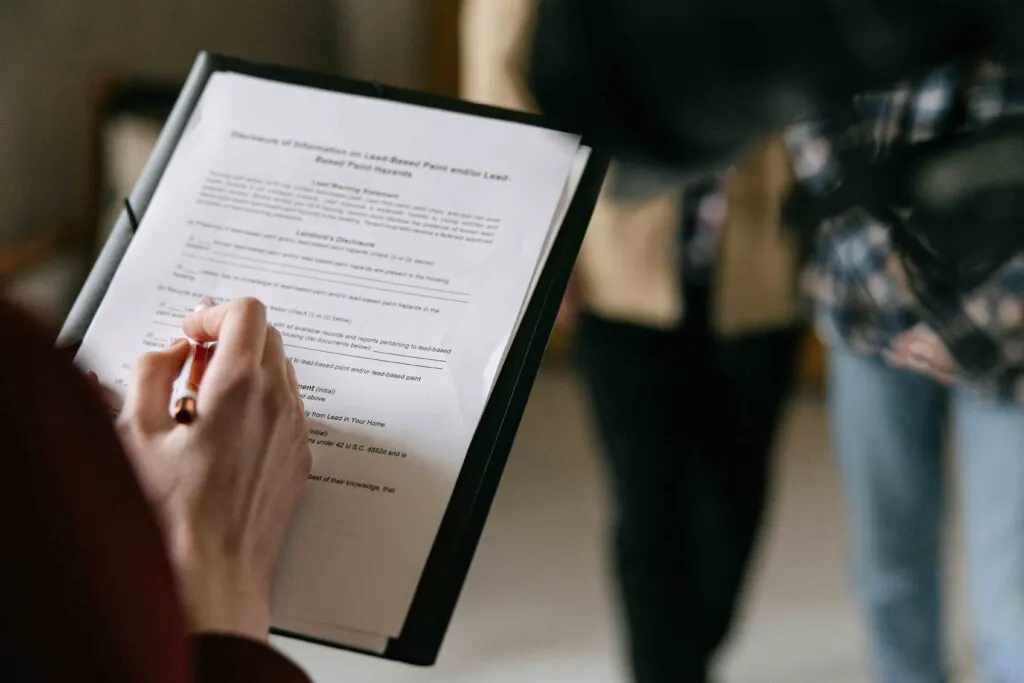
You signed the lease. You initialed every page. And now you’re staring at a clause that doesn’t seem right. Maybe a $200 late fee on a $1,300 apartment, or language that calls your security deposit “nonrefundable,” or a line that lets your landlord off the hook for a broken AC in July.
Here’s what most renters don’t realize: signing doesn’t make it enforceable.
Clients ask us about their leases all the time. We aren’t lawyers, but we’ve read plenty of them. Most Austin apartments use the standard Texas Apartment Association lease. Some private landlords use other templates, and a few clauses in those are void the moment they’re printed. Others are shaky enough that courts throw them out. Either way, renters deserve to know which parts of their lease hold up under Texas law and which parts are just words on a page.
This isn’t a “fight your landlord” piece. Many of these clauses are leftovers: a property management company bought a lease template and nobody updated it after the law changed. Some leasing teams don’t even know the clauses are unenforceable. On purpose or not, the effect on renters is the same: you end up paying money you don’t owe or giving up rights the law says you can’t waive.
What Makes a Lease Clause Unenforceable in Texas
A lease is a contract. But in Texas, contracts can’t override state law. The Texas Property Code spells out which tenant rights a landlord can’t waive, even with your written consent.
Worth noting: Texas is one of the strongest “freedom of contract” states in the country. Courts here enforce deals as written and don’t second guess the terms adults agree to. So when the legislature carves out protections that beat lease language (habitability, late fee limits, security deposit returns, the right to call police), lawmakers decided those issues were too important to leave to the contract. These aren’t technicalities. They’re choices made on purpose.
Section 92.006 is the backbone. It lists the rights a landlord can’t ask a tenant to give up in a lease. If a clause tries to waive any of them, the clause is void. Not voidable. Not negotiable. Void, as if it was never written.
Why does the distinction matter? “Void” means the clause has no legal effect from the start, regardless of whether you signed it or noticed it. “Unenforceable” is slightly different: a court won’t uphold the clause if challenged, but the clause may still appear in the lease. Some clauses fall into a gray area: no statute bans them outright, but Texas courts have struck them down when they’re unreasonable.
Quick reference:
| Clause Type | Legal Status | Key Statute / Authority |
|---|---|---|
| Habitability waiver / “as-is” language | Void | TX Property Code §92.006(c), §92.052 |
| Excessive late fees | Unenforceable | TX Property Code §92.019 |
| Repair obligation waiver | Void | TX Property Code §92.006, §92.052 |
| “Nonrefundable” security deposit | Unenforceable | TX Property Code §92.102–109 |
| Auto renewal with a notice deadline that’s easy to miss | Enforceable, but a trap | Depends on the lease (no statute bans it) |
| Blanket entry at any time | Likely unenforceable | Court precedent (no specific statute) |
| Pet policy overriding assistance animals | Void under federal law | Fair Housing Act, TX Fair Housing Act |
| Hold-harmless for landlord negligence | Usually unenforceable | TX case law |
Eight Lease Clauses That Don’t Hold Up
1. Waiver of Habitability / “As-Is” Language
Some leases have the tenant “acknowledge” the unit is rented “as-is” or “waive” the right to ask for repairs. You’ll sometimes find this buried in a paragraph about accepting the unit’s condition at move-in.
Under Texas Property Code §92.052, landlords must try to repair conditions that affect a tenant’s health or safety. Section 92.006(c) makes it plain: any lease clause that tries to waive this duty is void.
And there are real penalties. A landlord who knowingly puts a void repair waiver in a lease can owe actual damages, one month’s rent plus $2,000, and the tenant’s reasonable attorney’s fees under §92.006. Not vague liability. Specific dollar amounts written into the code.
One narrow exception exists. A landlord who owns a single rental unit can change (not erase) repair duties in writing, but only if the unit had no health and safety problems when the tenant moved in and the landlord had no reason to expect any during the lease. Apartment communities don’t qualify for this exception.
2. Excessive Late Fee Structures
Texas Property Code §92.019 sets specific rules for late fees, and many leases break them. Here’s what §92.019 says:
No late fee can be charged until rent has remained unpaid for two full days after the due date. This isn’t a “grace period” in the usual sense. It’s a required waiting period written into §92.019 itself. Rent due on the 1st? Earliest a late fee can hit is the 4th. A lease clause that tries to shorten this window is void.
The fee itself has to be “reasonable.” Here’s where the safe harbor kicks in:
| Property Type | Maximum Late Fee (Presumed Reasonable) |
|---|---|
| Properties with 4 or fewer units | 12% of one month’s rent |
| Properties with 5 or more units (most apartments) | 10% of one month’s rent |
Run the math on a $1,500/month apartment in a complex with 200 units: the maximum presumed reasonable is $150. A $200 late fee on that same apartment goes past the line the statute draws. A landlord can try to justify it with actual damages above the 10% mark, but it’s on them to prove it, and courts are skeptical.
What about daily late fees? §92.019(b) explicitly allows a fee that includes “an initial fee and a daily fee for each day any portion of the tenant’s rent continues to remain unpaid.” But the combined total counts as a single late fee and still has to stay under the reasonable limit.
So a lease that charges “$50 initial plus $10/day” isn’t automatically illegal. What matters is whether the running total crosses the 10% or 12% line by the time the landlord collects it. On a $1,500/month apartment in a large complex, a “$25/day” fee hits the $150 ceiling by day 6. Every dollar after that is outside the range presumed reasonable and open to challenge, and it’s on the landlord to prove actual damages justify it.
If a landlord collects a fee that breaks §92.019, the tenant can recover $100 plus three times the amount collected, plus attorney’s fees. Tenants can’t waive that either. A lease clause that tries to take away the tenant’s rights under this section? Void as well.
3. Repair Waiver Clauses
Repair waivers overlap with habitability but cover a broader range. Any clause that tries to excuse the landlord from duties under §92.052 is void under §92.006. It doesn’t matter how it’s worded: “tenant accepts responsibility for all maintenance,” “landlord is not responsible for appliance repair,” “tenant agrees to handle minor repairs at tenant’s expense.” All void whenever the repair involves health or safety.
If the problem puts health or safety at real risk, the landlord has to fix it no matter what the lease says. Broken deadbolt. Dead smoke detector. Sewage backup. Mold that keeps coming back. No heat in winter. All covered.
Texas law does allow one narrow exception. A written agreement, either underlined or in bold print in the lease or in a separate document, can make the tenant pay for a short list of repairs: drain stoppages caused by things the tenant put down the drain, damage to doors, windows, and screens, and damage from doors or windows left open. Only those items.
4. “Nonrefundable” Security Deposit
One of the most common lease tricks in Texas. And one of the easiest to challenge.
Texas Property Code §92.102 defines a security deposit as any money paid up front (other than an application deposit or advance rent) to secure your promises under the lease. Under §92.103, the landlord must refund the deposit within 30 days of the tenant surrendering the premises, minus legitimate deductions for damages beyond normal wear and tear, unpaid rent, or charges owed under the lease.
Calling the deposit “nonrefundable” doesn’t change what it is. If the money works like a security deposit, meaning it’s paid up front to cover possible damage or unpaid rent, then it is a security deposit under the code. The label doesn’t matter. As UNT Dallas law researchers have written, there is no such thing as a nonrefundable security deposit in Texas.
Keeping a deposit in bad faith carries steep penalties: $100 plus three times the amount wrongfully withheld, plus attorney’s fees under §92.109.
A few details worth knowing:
- Application fees are nonrefundable by design. They pay for screening and aren’t security deposits.
- Administrative fees are often set up as nonrefundable and usually hold up if the lease spells them out.
- Pet deposits sit in a gray area. If the lease calls it a nonrefundable pet fee rather than a deposit, it may be treated differently. But if it works like a deposit (held against pet damage), the 30 day return rules likely apply.
Safest approach: if you paid money at move-in to secure your lease, treat it as refundable and ask for a full accounting within 30 days of move-out. Provide your forwarding address in writing. The landlord’s 30-day clock doesn’t start until you do.
5. Auto Renewal With an Easy to Miss Deadline
Auto renewal clauses aren’t void under Texas law. They’re legal. But they’re built to catch you off guard.
And they work.
A typical clause reads: “This lease automatically renews for an additional 12-month term except when the tenant provides written notice of intent to vacate at least 60 days before the lease expiration date.” Some leases require 90 days. A few require the notice at move-in, meaning you have to declare your intent to leave before you’ve spent a single night in the apartment.
The clause is enforceable. The problem is practical: most renters don’t put the notice deadline on their calendar, find out about the auto renewal too late, and end up locked into a new term or facing an early termination fee.
| Notice Requirement | Lease End Date | Deadline to Give Notice |
|---|---|---|
| 30 days | August 31 | August 1 |
| 60 days | August 31 | July 2 |
| 90 days | August 31 | June 2 |
The day you sign your lease, find the renewal clause, note the notice window, and put the deadline on your calendar with two weeks to spare. This is the single most common lease trap we see in Austin, and it costs renters thousands when they miss it, either in early termination fees or in staying another year at a rate they didn’t negotiate. Knowing how net effective rent works at renewal matters too: the concession you got in year one rarely carries over.
Want to talk through your lease terms before you sign, or figure out your renewal options? Call us at 512-360-0852.
6. Blanket Entry Clauses
Texas doesn’t have a specific statute requiring landlords to give notice before entering a rental unit. That’s unusual compared to states like California (24-hour notice required) or Arizona (2 days). But no statute doesn’t mean the landlord can walk in whenever.
Clauses granting the landlord “the right to enter the premises at any time for any reason without notice” go beyond what Texas courts consider reasonable. Texas courts recognize a right to quiet enjoyment even without an entry statute, so a landlord can’t use a broad entry clause to harass a tenant or make the unit miserable to live in. The Texas Attorney General lists quiet enjoyment as a right Texas tenants have.
What counts as reasonable? Maintenance emergencies, scheduled repairs with notice, inspections the lease calls for with notice ahead of time, and showing the unit to new renters during the last 30-60 days of the lease.
What crosses the line? Entry at any hour, entry for vague “inspections,” entry with no notice at all, or entry that amounts to keeping tabs on you. If your lease has entry language with no limits, flag it. No court has set a required number of hours’ notice, but courts judge these clauses on whether they’re reasonable when someone challenges them.
7. Pet Policy Overreach: Assistance Animals
Federal law controls here, and it beats any lease clause.
Under the Fair Housing Act and the Texas Fair Housing Act, landlords must make reasonable accommodations for tenants with disabilities who need assistance animals. That includes both service animals (trained to perform specific tasks) and emotional support animals (providing therapeutic benefit for a mental or emotional disability).
Here’s where the distinction matters:
| Regular Pet | Assistance Animal (Service or ESA) | |
|---|---|---|
| Subject to pet deposit | Yes | No, deposits and fees prohibited |
| Subject to pet rent | Yes | No |
| Breed/size restrictions | Yes | No. Can’t be denied based on breed |
| Requires documentation | Depends on the lease | ESA: letter from licensed mental health professional. Service animal: no documentation required |
| Damage liability | Standard lease terms | Tenant still liable for damage caused by the animal |
A lease clause that charges pet rent, pet deposits, or applies breed restrictions to a legitimate assistance animal is unenforceable under federal law. Doesn’t matter what the lease says. Doesn’t matter that you signed it.
Landlords can ask for documentation: a letter from a licensed mental health professional confirming the disability and the need for the animal. They can’t ask how severe the disability is, demand medical records, or require the animal to be registered or certified.
If your landlord is charging you pet rent or a pet deposit for a documented assistance animal, that’s a Fair Housing Act violation. You can file a complaint with the TWC Civil Rights division or HUD’s fair housing office.
Need an apartment community that handles assistance animal requests the right way? Call us at 512-360-0852. We work with property managers who know these rules.
8. Hold-Harmless / Liability Waiver Clauses
Some leases require the tenant to “hold harmless” the landlord and waive any right to sue for injuries or property damage occurring on the premises. These clauses try to protect the landlord even when the landlord’s own negligence caused the problem.
A real world example: your upstairs neighbor reports a leak that won’t stop. The property opens a maintenance ticket but doesn’t follow up. Three months later, the ceiling in your unit collapses, damaging your furniture and laptop. Your lease says you “waive any claims against the landlord for property damage occurring on the premises.”
Does that clause protect the landlord? Almost never.
Texas courts have found that pre-injury waivers of negligence claims in apartment leases go against public policy. The reasoning: a renter signing a standard lease has no real power to cross out that clause. The landlord shouldn’t get a free pass from a term they wrote and imposed.
Ask yourself whose negligence caused the harm. A clause making you pay for damage you cause (your bathtub overflows after you leave the water running) is different from one shielding the landlord from a known problem they ignored. One is a normal contract term. The other goes against public policy. Courts draw the line there.
Not every hold-harmless clause is automatically void. Waivers have been upheld in commercial leases and recreation waivers, where both sides have roughly equal bargaining power. But in an apartment lease, where the tenant signs a take-it-or-leave-it form, courts look harder. If you’re injured or suffer property damage from a condition the landlord knew about and failed to repair, the hold-harmless clause in your lease is unlikely to prevent you from pursuing a claim. These cases turn on the details, so talking to a tenant rights or personal injury attorney is worth the time.
What to Do If Your Lease Contains These Clauses
Don’t panic. And don’t assume your entire lease is invalid. A void or unenforceable clause doesn’t cancel the rest of your lease. It means that one provision can’t be used against you.
Step 1: Find the clause and match it to the statute. The table near the top of this article is a starting point.
Step 2: Put everything in writing. If your landlord is trying to enforce a clause you believe is unenforceable, send a written request (email counts) that cites the section of the Texas Property Code. “Per Texas Property Code §92.019, the late fee structure in our lease exceeds the statutory threshold” carries a lot more weight than saying the fee feels unfair.
Step 3: Know where to go next. If the landlord won’t budge, Texas tenants have options: file a complaint with the Texas Attorney General, contact local legal aid, or pursue the claim in Justice Court (small claims in Texas). For amounts under $20,000, you don’t need a lawyer.
Step 4: Get help when you need it. For simple lease questions, the Austin Tenants Council (512-474-1961) and TexasLawHelp.org both offer free guidance. For complex situations involving injury, significant financial harm, or repeated landlord violations, consult a tenant rights attorney. Many offer free initial consultations. The City of Austin keeps a current list of assistance programs and legal aid contacts.
How to Protect Yourself Before Signing
Reading your whole lease sounds obvious. Most people don’t do it. And the ones who do often don’t know what to look for.
A practical approach: start with these sections. Late fees. Security deposit terms. Renewal and termination. Entry and access. Pet policy. Repairs. And any clause containing the phrase “waive,” “hold harmless,” or “as-is.”
If a clause seems odd, email the leasing office and ask them to explain it. Their written answer becomes your record if there’s a dispute later.
Know the red flags:
| Red Flag | What It Might Mean |
|---|---|
| “Tenant waives right to repairs” | Void habitability waiver, §92.006(c) |
| “Nonrefundable deposit” | Likely a security deposit regardless of label |
| Late fee exceeding 10% of rent (in a large complex) | Potentially exceeds §92.019 threshold |
| “Landlord may enter at any time” | Too broad, may not hold up in court |
| “No pets of any kind, no exceptions” | May violate Fair Housing if applied to assistance animals |
| “Tenant holds landlord harmless for all injuries” | Likely unenforceable for landlord negligence |
One more thing. A clause can be legally shaky and still sit in your lease. Most renters won’t challenge a clause until it hits them directly. But knowing your rights up front puts you in a stronger spot during lease talks. And yes, you can negotiate apartment leases, especially in a market with high vacancy and active concessions. If you’re dealing with screening challenges on top of lease clause concerns, knowing what the law actually requires helps you sort real requirements from boilerplate nobody can enforce.
Texas Lease Clause Questions: Frequently Asked
Can a landlord actually enforce an illegal lease clause in Texas?
No. A void clause has no legal effect whether you signed it or not. If a landlord tries to enforce a clause that violates the Texas Property Code, you can challenge it in writing, file a complaint with the Texas Attorney General, or take it to Justice Court. Putting the clause in the lease can leave the landlord owing penalties under the statute, too.
What happens if you already signed a lease with an unenforceable clause?
Your lease stays valid. Texas courts typically sever the unenforceable clause and enforce the rest. You don’t need to renegotiate the entire agreement. Just know that the specific void provision can’t be held against you.
Can your landlord charge a $200 late fee on your Austin apartment?
That comes down to your rent and the size of the property. For apartments in complexes with 5 or more units, Texas law presumes fees above 10% of monthly rent are unreasonable under §92.019. On a $1,500/month apartment, the maximum presumed reasonable is $150. A $200 fee exceeds that. The landlord can try to justify it based on actual damages, but the burden of proof is on them.
Is your security deposit actually nonrefundable?
If the money you paid works like a security deposit (money up front to secure your lease), it’s refundable under Texas Property Code §92.102-109, no matter what the lease calls it. The landlord must return it within 30 days of move-out, minus legitimate deductions, after you provide a written forwarding address.
Can your landlord enter your apartment without notice in Texas?
No specific statute requires advance notice for entry. But courts judge entry provisions on a reasonableness standard. A clause allowing unlimited entry with no warning goes past what’s reasonable and could be challenged, especially if the landlord uses it to harass or if it interferes with your right to quiet enjoyment.
Can your landlord charge pet rent for your emotional support animal?
No. Under the Fair Housing Act and the Texas Fair Housing Act, assistance animals (including ESAs with proper documentation) are not pets. Landlords can’t charge pet rent or pet deposits, or apply breed or size limits. They can ask for a letter from a licensed mental health professional but can’t demand medical records or require registration.
What’s the difference between void and unenforceable?
Void means the clause has no legal effect from the start, as if it was never written. Unenforceable means the clause exists in the lease but won’t be upheld by a court if challenged. In practice they work about the same: neither can be used against you. The difference shows up in how penalties and remedies are figured.
Can you break your lease if it contains illegal clauses?
Not automatically. An illegal clause doesn’t void your entire lease. Texas courts sever bad clauses and enforce the rest. You can break your lease without penalty in specific situations (domestic violence, military deployment, unlivable conditions, an illegal lockout or utility cutoff), but an unenforceable clause sitting in your lease isn’t one of them.
Does your landlord have to make repairs if the lease says they don’t?
Yes, if the problem puts your health or safety at real risk. Any clause waiving the landlord’s repair duty under §92.052 is void under §92.006(c). Send a written repair request, give the landlord reasonable time to respond, and if they don’t act, Texas law provides remedies including repair-and-deduct, lease termination, or court action. The Texas Attorney General outlines the full repair request process.
Where can you get free legal help with a lease dispute in Texas?
TexasLawHelp.org keeps a directory of free legal aid providers by county. The Austin Tenants Council (now a project of Texas RioGrande Legal Aid) offers free guidance for Austin-area renters at 512-474-1961. The Attorney General accepts complaints about landlord violations. For small claims under $20,000, you can file in Justice Court without an attorney.
Are daily late fees legal in Texas?
The statute allows a late fee with both an initial charge and a daily charge, but the combined total counts as one fee and has to pass the same reasonableness test. Above 10% of monthly rent (for properties with 5+ units), the landlord has to show actual damages to justify the higher amount. A lease charging “$10/day” on a $1,400/month apartment crosses the $140 line by day 14. Past that point, the extra is open to challenge if the landlord can’t show real costs from the late payment. The standard TAA lease form caps daily charges at 15 days per month, so even the industry’s own template sees the problem with fees that keep stacking up.
Signing a lease with an unenforceable clause doesn’t mean you gave up rights the Texas Property Code says you can’t waive. What matters is which clause you’re dealing with and which statute applies. Most of these protections have real teeth, like $100 plus three times the amount wrongly collected, plus attorney’s fees. That gives landlords a strong reason to follow the law once you show you know it.
You don’t need a lawyer for most of these situations. You need to know what your lease says, check it against what the law allows, and put everything in writing. When that’s not enough, Texas legal aid and Justice Court are easy for renters to use.
The Austin Apartment Team helps renters find apartments that fit their budget, location, and screening profile, at no cost. If a lease clause is getting in the way of your search or raising questions you can’t answer, call us at 512-360-0852 or get in touch. We’ll walk through it with you.
This article provides general information about Texas landlord-tenant law and is not legal advice. For guidance on your specific situation, consult a licensed Texas attorney. Law referenced above is current as of March 2026. Texas Property Code provisions and court rulings can change. Check the current statutes before relying on this information.